
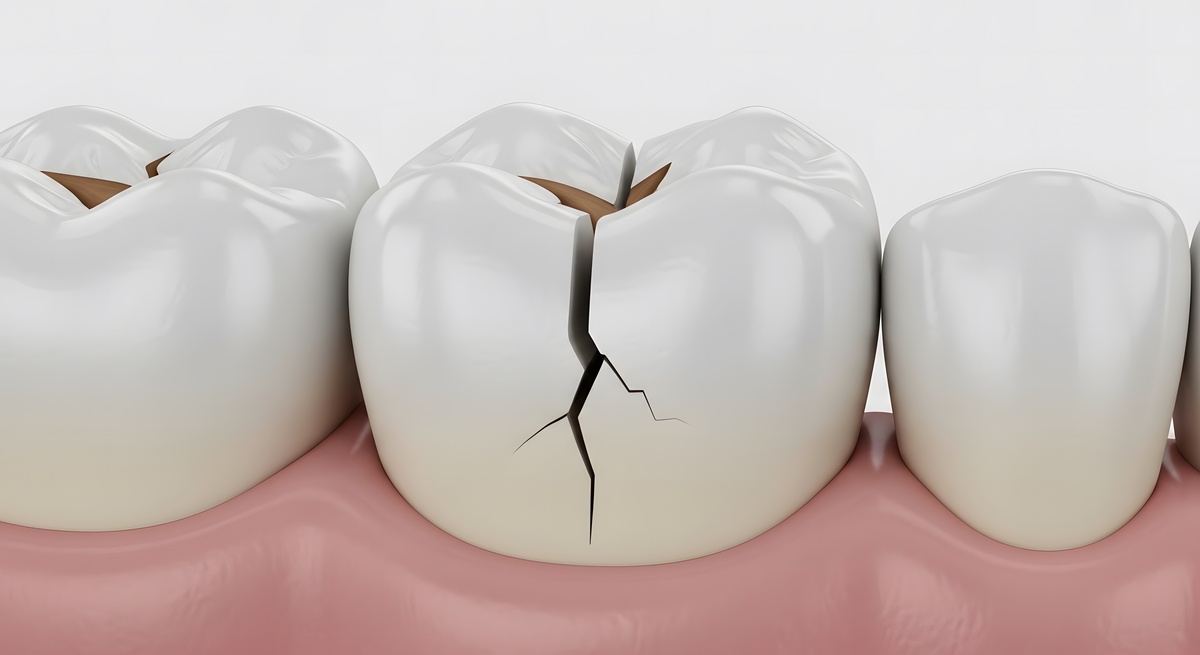
A sharp pain when you bite down on your favorite sandwich. A sudden jolt of sensitivity to cold drinks. Sarah, a busy marketing director, ignored these warning signs for weeks, assuming a simple porcelain crown would fix everything. When she finally visited her dentist, the news wasn’t what she expected. Her cracked tooth had developed an infection deep within, requiring comprehensive treatment beyond what a standard crown could provide.
The truth is, not all cracked teeth can be saved with crowns alone. At Brightworks Dentistry, Dr. Patrice Robbins and Dr. Preston Shurley see patients every week who discover their tooth damage runs deeper than anticipated. Understanding when a cracked tooth needs more extensive care helps you make informed decisions about protecting your smile and preventing future complications.
Understanding the Severity of Your Cracked Tooth
When a tooth crack extends beyond the outer enamel layer, the situation becomes more complex. Surface-level cracks may respond well to crowns, but deeper fractures often reach the tooth’s pulp, where nerves and blood vessels reside. Once bacteria infiltrate this inner chamber, infection can develop quickly.
The depth and location of the crack determine your treatment path. Vertical cracks extending below the gum line often compromise the tooth’s structural integrity so severely that no crown can restore proper function. Horizontal cracks may split the tooth into separate fragments, making preservation impossible. These scenarios require solutions beyond traditional crown placement.
Signs Your Crack Requires Advanced Treatment
Your body provides clear signals when a crack has progressed beyond simple repair. Persistent throbbing pain, even without chewing, suggests pulp involvement. Swelling around the affected tooth or along your gum line indicates infection spreading to surrounding tissues. If you notice discoloration, particularly a grayish hue, the tooth’s internal structure may be compromised.
Temperature sensitivity that lingers for more than a few seconds after the stimulus is removed often means the crack has exposed the tooth’s inner layers. When a cracked tooth allows bacteria to reach the pulp through decay or trauma, infection and painful abscess formation may follow.
Root Canal Therapy: Saving the Tooth from Within
When infection reaches your tooth’s pulp, root canal therapy becomes necessary before any crown can be placed. Dr. Shurley, who brings extensive surgical and implant experience to Brightworks Dentistry, carefully removes infected tissue from the tooth’s interior. This treatment eliminates pain, stops infection spread, and preserves the tooth’s outer structure.
The process involves accessing the pulp chamber, cleaning and shaping the root canals, and sealing them to prevent future infection. After root canal treatment, your tooth becomes more brittle and requires crown protection for long-term stability. Many patients find the procedure far less uncomfortable than they anticipated, especially with modern anesthetics and sedation options available.
When Root Canal and Crown Work Together
Following successful root canal therapy, cosmetic dentistry options like porcelain crowns restore both function and appearance. The crown acts as a protective shell, distributing chewing forces evenly and preventing further damage. This combination approach allows you to keep your natural tooth root while addressing the crack and infection simultaneously.
However, timing matters. Placing a crown too quickly after root canal therapy may trap residual bacteria. Conversely, waiting too long leaves the tooth vulnerable to fracture. Dr. Robbins, who brings years of cosmetic dentistry experience to each case, carefully evaluates the ideal timeframe for crown placement based on your healing progress.
Dental Implants: Starting Fresh When Necessary
Sometimes, a crack extends so deeply or creates such extensive damage that saving the tooth becomes impossible. Dental extractions followed by implant placement offer a permanent solution when other treatments cannot succeed. While this might sound drastic, modern implants provide stability and appearance nearly identical to natural teeth.
Dr. Shurley’s surgical background makes complex extraction and immediate implant placement possible in many cases. This approach reduces the overall treatment time and preserves bone structure that might otherwise deteriorate. Implants integrate with your jawbone over several months, creating a foundation as secure as your natural tooth roots.
Choosing a Practice That Puts Your Needs First
The difference between saving and losing a cracked tooth often comes down to accurate diagnosis and comprehensive treatment planning. At Brightworks Dentistry in Dunwoody, Georgia, you’ll find a team that combines Dr. Robbins’ cosmetic dentistry training with Dr. Shurley’s surgical and implant placement skills, creating comprehensive dentistry solutions under one roof.
When you face the uncertainty of a damaged tooth, you deserve more than a quick fix. You deserve dentists who take time to explain your options, show you exactly what’s happening with your tooth, and create a treatment plan tailored to your situation. Don’t let a cracked tooth dictate your quality of life. Contact our office today to schedule an evaluation with Dr. Robbins or Dr. Shurley and discover the comprehensive care your smile deserves.