
A hit to the mouth during a game can leave you disoriented and unsure what to do next. Whether a basketball elbow caught you off guard or a collision on the soccer field knocked out a tooth, the first question most athletes and parents ask is the same: do I go to the ER, or do I call a dentist? The answer depends on the type and severity of the injury, and knowing the difference can mean the difference between saving a tooth and losing it.
For most dental sports injuries, an emergency dentist is your best first call. We at Brightworks Dentistry in Dunwoody, Georgia, are equipped to handle a wide range of sports-related dental trauma, from cracked teeth to complete tooth avulsions. Our team includes Dr. Patrice Robbins and Dr. Preston Shurley, who bring Advanced General Dentistry Residency training and surgical experience that make them particularly prepared for complex dental injuries. We offer comprehensive, in-house care so you are not shuffled between multiple providers during an already stressful situation.
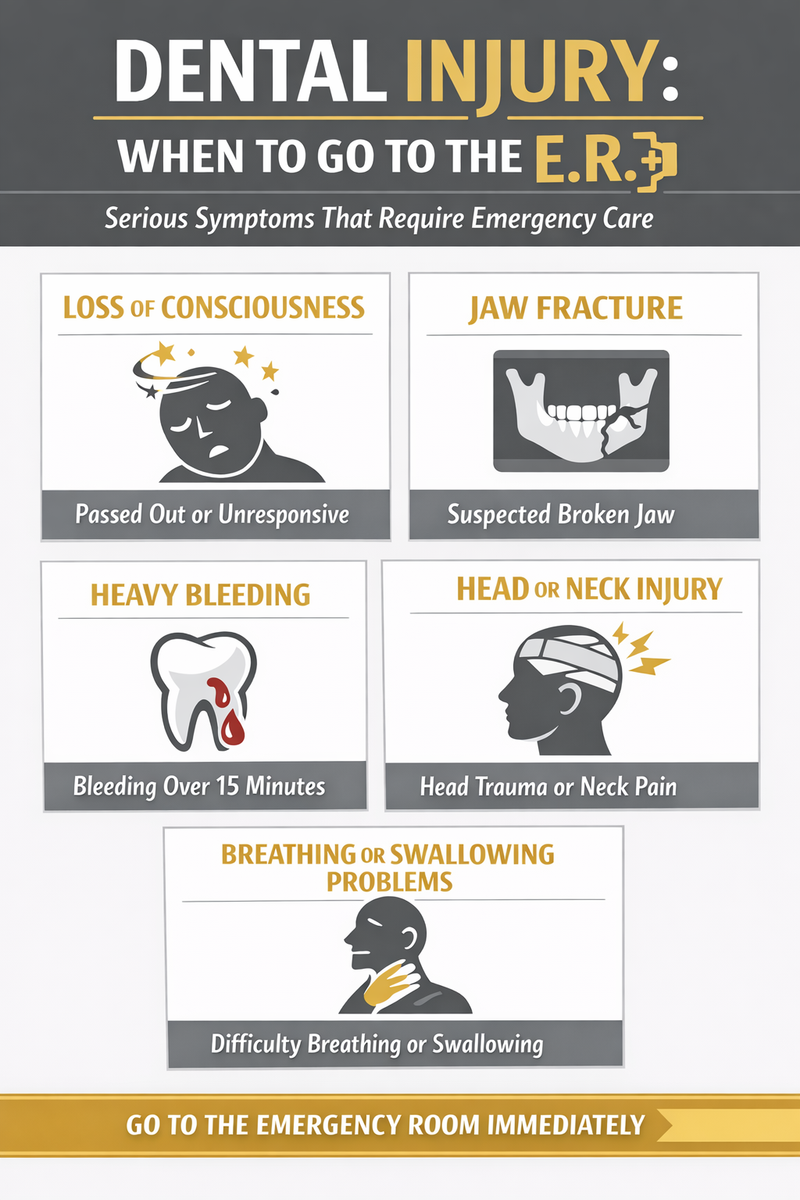 When to Go to the Emergency Room
Most dental injuries do not require a hospital emergency room. However, some situations do. If any of the following are present alongside a dental injury, the ER should be your first stop:
- Loss of consciousness, even briefly
- Suspected jaw fracture
- Uncontrolled bleeding lasting more than 15 minutes
- Signs of a head or neck injury
- Difficulty breathing or swallowing
These symptoms suggest an injury that goes beyond your teeth and gums. Hospital emergency departments are equipped for trauma of this nature, including stabilizing fractures and ruling out concussions. Once the medical situation is stable, you can follow up with a dentist to address the dental damage.
When to Call an Emergency Dentist First
For dental injuries without any of the medical red flags above, an emergency dentist is the right first move. Hospital ERs generally cannot perform dental treatment. They may prescribe pain medication or antibiotics, but they cannot re-implant a knocked-out tooth or repair a fractured crown. Time is critical, especially with avulsed (knocked-out) teeth, which have the best chance of successful re-implantation within 30 to 60 minutes of the injury.
Research from the American Academy of Pediatric Dentistry shows that between 10 and 61 percent of athletes experience dental trauma at some point, with a significant portion of those injuries occurring during organized sports. Despite how common these injuries are, many people still head to the ER first, where dental treatment simply is not available.
Common Sports-Related Dental Injuries
Sports can cause several types of dental trauma, each requiring prompt professional care. Here is what we most commonly see.
Knocked-Out Teeth
A tooth fully knocked out can often be saved if you act quickly. If this happens, pick the tooth up by the crown, not the root, and rinse it gently with water. Try to place it back in the socket if possible, or store it in milk or saliva on the way to our office. We can often re-implant the tooth, and Dr. Shurley’s surgical background is especially valuable in these cases. If re-implantation is not possible, dental implants are an excellent long-term replacement option.
Cracked or Fractured Teeth
A hard impact can crack a tooth in ways you may not immediately see. Some cracks cause sharp pain when biting, while others may not hurt at all until the damage progresses. Early treatment matters here. Depending on the severity, we may restore the tooth with a porcelain crown that provides both function and a natural appearance.
Tooth Intrusion or Extrusion
An intruded tooth has been pushed deeper into the jawbone, while an extruded tooth has been partially displaced from the socket. Both require immediate dental evaluation and may involve oral surgery to properly reposition or treat the affected tooth.
Severe Tooth Damage Requiring Extraction
Sometimes the damage is too extensive to save the tooth. In cases where the root is fractured or the tooth cannot be restored, we perform dental extractions as comfortably as possible and discuss replacement options right away, so you leave with a clear plan for what comes next.
What to Do Immediately After a Dental Sports Injury
The moments right after an injury matter. Stay calm, apply gentle pressure to any bleeding with a clean cloth, and avoid touching fracture sites with your fingers. Cold compresses on the outside of the mouth can reduce swelling.
Do not take aspirin, which can increase bleeding. Call a dentist as soon as possible, even if the injury seems minor. Some damage, including root fractures or soft tissue injuries inside the jaw, may not cause immediate pain.
Turn to Brightworks Dentistry for Sports Dental Emergencies
Sports injuries happen fast, and your response should too. At Brightworks Dentistry, we take dental trauma seriously and are ready to help you navigate the next steps, whether you need immediate treatment or a follow-up plan. Dr. Shurley’s residency training and surgical background, combined with Dr. Robbins’ commitment to comprehensive care, mean you are seen by providers who understand both the clinical and emotional weight of a sudden dental injury.
If you have suffered a sports-related dental injury, do not wait. Contact us right away so we can assess the damage and get you on the path to recovery. The sooner you reach out, the more options we have to protect your smile.